
Solar power is becoming a practical choice for many homeowners. Rising electricity bills are one reason for this shift. Another is the growing interest in cleaner energy.
However, installing solar panels is not simply about placing panels on a roof. The system needs proper planning, suitable equipment, and safe electrical connections. A good setup can also help homeowners get better value from their investment.
This guide explains the residential solar panel installation process from start to finish. It also covers system selection, space needs, electrical requirements, maintenance, and savings.
What Is Residential Solar Panel Installation and How Does It Work?
Residential solar panel installation is the setup of the solar power system at your residence. The panels are installed on the rooftop so as to make use of the solar energy. Solar panels absorb the solar energy and convert it into DC power. Then the inverter converts it into AC power, which is used in homes.
This system can be used to power lighting systems, fans, refrigerators, air conditioners, and other home electrical devices. In some situations, surplus electricity may be fed into the grid.
Before installation, a professional analyzes the energy requirements of your home. This includes electricity bill analysis and roof space. This helps determine the right system size and suitable home solar solutions.
Step-by-Step Process of Installing Solar Panels at Home
The installation process involves a few steps. Each one of them helps ensure that the system works safely and also helps avoid issues after installation.
1. Check Your Home's Energy Use
The first step is understanding how much electricity your home uses. Recent electricity bills can provide a useful starting point.
Look at your monthly units or kilowatt-hour usage. Also, consider appliances that use more power. Air conditioners, water heaters, and washing machines can affect your total demand.
This information helps create a realistic estimate of your solar needs.
2. Inspect the Roof
Next, the installer checks the roof space available for the panels. The roof should have enough usable area for the planned system.
Its condition matters too. A weak or damaged roof may need repairs before work begins.
Sunlight exposure is another key factor. Nearby buildings, trees, or other structures can create shade. Therefore, the installer needs to identify possible shading issues before choosing rooftop solar for home.
3. Select the System Size
After establishing the energy consumption and the area of the roof, the system size can be determined. In the case of a small house, a small-sized system will be needed, while a large house consuming more energy might need a system of a greater capacity.
The objective here is not to just install as many panels as possible, but the system must cater to your needs, budget, and available space.
4. Plan the Equipment
Solar rooftop systems consist of more than solar panels. An inverter, mounts, cables, and other parts are also included.
The placement of each and every component is decided by the installation service provider. Correct placement will make future maintenance easy. At this stage, homeowners can also explore the finance options that may be available for the installation process.
5. Install the Mounting Structure
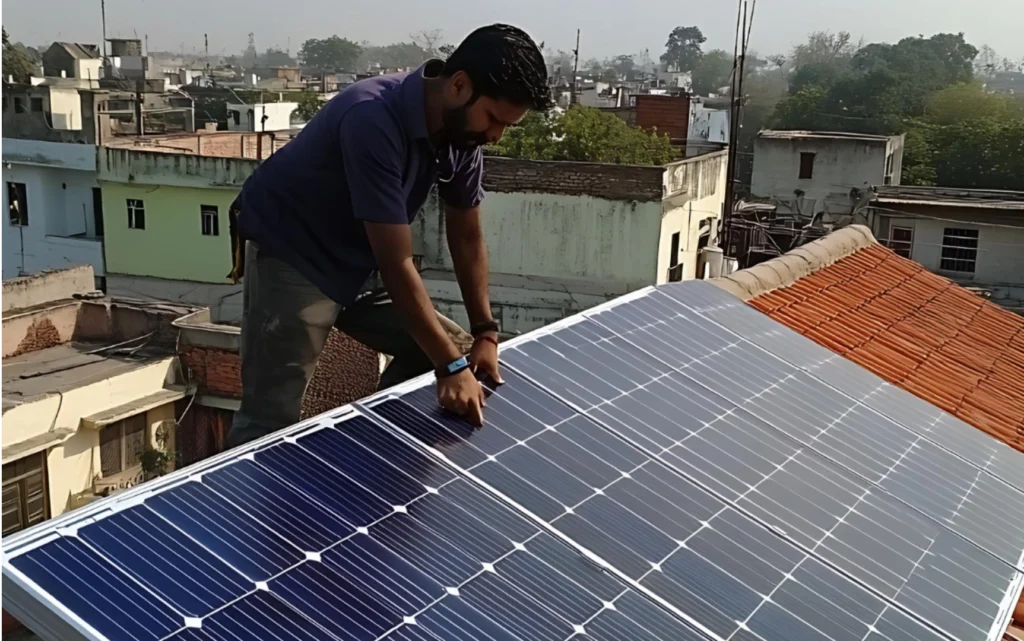
After planning is complete, installation can begin. Workers first secure the mounting structure to the roof. The structure holds the panels firmly in place. It also needs to withstand local weather conditions. The mounting method depends on the roof type and system design. Proper fitting is important because loose structures can create safety risks.
6. Install the Solar Panels
Solar panels are now placed on the mounting structure. The positioning is done such that they get adequate sunlight throughout the day. The panels are interconnected using the appropriate cables. This interconnection helps the produced electricity flow towards the inverter.
Careful handling is important during solar panel installation. Every connection should follow the planned design and relevant safety requirements.
How to Choose the Right Solar System for Your Home?
When selecting a solar panel system, it is recommended to start by assessing your electricity requirements. Energy consumption per month is a much better indicator than the size of the house.
The roof area is important as well. It could happen that your roof is small, which limits the installation of a certain number of panels. Your future electricity requirements have to be taken into account as well. You could plan to get an electric car.
The inverter should also match the system capacity. You can compare rooftop solar solutions based on equipment quality, installation support, warranty, and after-sales service.
The cheapest option may not always offer the best long-term value. Consider the complete system and support provided after installation.
Cost, Space & Electrical Requirements for Residential Solar Installation
The cost of solar depends on system size, panel type, inverter, roof design, and installation work. So, homeowners should compare the complete pricing quotation instead of looking only at panel prices. Roof space also matters. The installer checks the usable area, sunlight, roof strength, and possible shade. These factors help decide whether rooftop solar for home is suitable.
Your home’s electrical setup must also support the new system. A professional should check the wiring, meter, and required safety equipment before installation.
Maintenance, Savings & Long-Term Benefits of Home Solar Panels
Solar panel maintenance is essential; however, the procedure is relatively easy. Cleaning the panels ensures that they have sufficient light. Checking on cables and mountings from time to time is also beneficial.
Over time, solar can make you less reliant on grid power, which can reduce your monthly electricity bills, especially considering increasing energy costs.
Residential solar solutions provide a more eco-friendly way of fulfilling energy needs for most homeowners. With proper installation, the system can allow you to save money for years to come while utilizing roof space more efficiently.
Conclusion
Solar panel installations can save money on electricity bills while offering energy from a clean source. Nevertheless, it is important to choose the correct system based on your usage of electricity, amount of space available on your roof, budget, and future needs.
Consequently, the importance of proper planning should not be underestimated before installation begins. With the right planning and regular care, solar can become a useful long-term energy solution for your home.