
Electricity is a regular expense for every housing society. Common areas such as lifts, pumps, corridors, parking areas, and security systems all need power. As electricity costs rise, societies are looking for practical ways to manage these expenses.
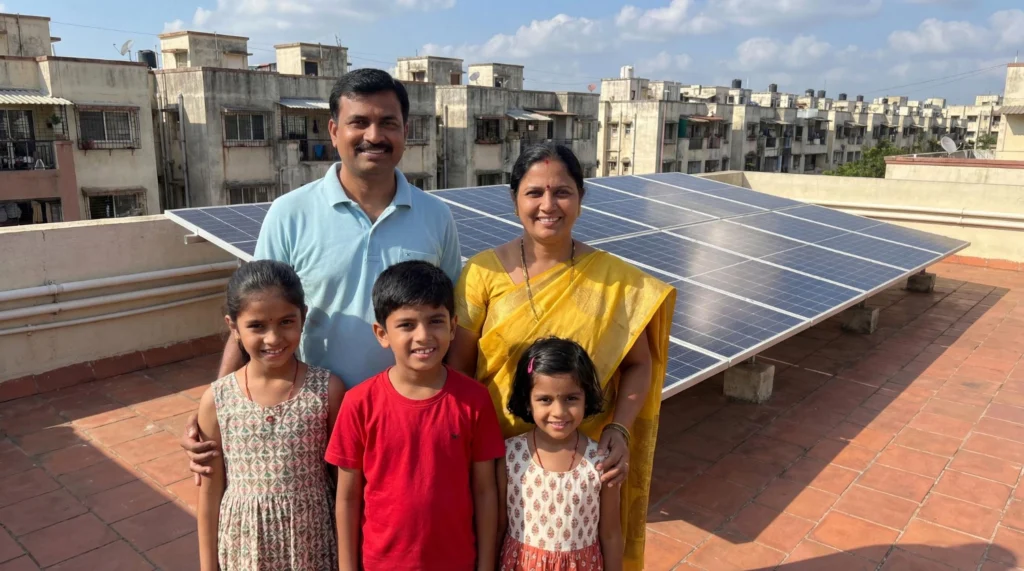
Installing a solar panel for housing society can help reduce the amount of electricity a society buys from the grid. This will also allow the society to utilize the unused space on the roof. However, when it comes to the installation of solar power within the society, there is more planning than is required for an ordinary household.
This is because the system must match the consumption pattern, roof space available, budget, and the electrical infrastructure of the society.
Why Should Housing Societies Consider Solar Panels?
A housing society has several common facilities that consume electricity daily. Lifts, water pumps, lighting, CCTV systems, and other shared services can create a significant monthly power bill.
Installing a solar panel for housing society can offset some of this electricity use. Power generated during the day can support common-area loads and reduce dependence on grid electricity. Moreover, there is efficient utilization of rooftop space. Solar panels have the potential to generate power from rooftops that were not being used for anything.
Solar panels can even be considered as profitable investments. After covering the initial expense of installation, the generation of electricity can help to keep costs low.
But it depends on several factors such as system capacity, consumption of electricity, sunlight availability, and cost of electricity in the local area. So societies need to analyze their requirements to determine the appropriate capacity of solar systems.
How Solar Panels for Housing Societies Work
The working principle is much the same as that of a residential solar system. Sunlight is collected by rooftop panels and converted into DC electricity. An inverter converts this electricity into AC, which is usable for certain common area loads. In case of excess production of electricity, the handling of electricity will depend on the relevant metering system.
Before installing the system, the society needs to go through its electricity bills to find out the loads of the common area. The electrical infrastructure should be assessed as well. A professional can determine how the system should connect with the society’s existing setup.
This planning is important because a larger system is not always better. The aim is to match the system with actual energy needs.
Different rooftop solar solutions can then be compared based on capacity, equipment, expected generation, warranty, installation, and after-sales support.
Future needs should also be considered. Plans for EV charging, additional pumps, or other facilities may affect the required system capacity.
Solar Panel Cost and Potential Savings for Housing Societies
Solar installation costs depend on system capacity, panel type, inverter, mounting structure, roof condition, wiring, and installation work.
The rooftop solar cost should therefore be assessed according to the society’s requirements. A professional site assessment can help determine the available roof area and suitable system size.
Savings depend mainly on system generation and how much electricity the society can use. A society with high common-area consumption may have greater savings potential. The managing committee can use a solar savings calculator for an initial estimate. However, actual savings can vary based on sunlight, electricity tariffs, system performance, and energy use.
Comparing expected yearly savings with the initial investment can also help the society understand its potential payback period.
Approvals and Installation Process for Society Rooftop Solar
Installation of solar energy in any housing society will most likely not involve all society members and will go through the process set in place by the society administration department to make such decisions.
The board of directors will have to first look into electricity bills, check out the available rooftop space, and discuss the entire project with an expert on solar energy installation.
After all the approvals are in place, the process will commence. Most installers conduct a technical survey before deciding on the design. The other activities to follow will include selection of materials, making of mounting structures, installation of the panels, fixing up of the inverter, and all the electrical activities.
Any applicable DISCOM or metering requirements should also be followed. The society should keep records of approvals, quotations, warranties, invoices, and other project documents.
Clear communication is important throughout the process. Residents should know how the project will affect the rooftop, installation schedule, and common-area operations.
How to Choose the Right Solar Energy Solutions Provider for Your Society
Choosing the right solar energy solutions provider can affect both installation quality and long-term performance. Societies should look beyond the lowest quotation when comparing providers.
Check the provider’s experience with larger rooftop systems and ask about the equipment being proposed. Panel quality, inverter specifications, mounting systems, warranties, and maintenance support should all be considered.
The provider should also explain the expected energy generation and estimated savings in simple terms. Ask for a clear cost breakdown so there are no unexpected charges later.
After-sales service is equally important. Solar panels are designed for long-term use, so the society should know who will handle inspections, repairs, and system-related issues.
A suitable provider should also help the committee understand the technical and approval requirements. This makes the project easier to plan and helps the society make a more informed decision.
Conclusion
Housing society solar panels can help reduce common-area electricity expenses while making better use of rooftop space. But the ideal system to be chosen will depend on energy consumption, roof quality, budget, and local regulations.
With a detailed analysis, proper authorization, and choosing the ideal partner for the installation of the solar system, the process will be made easier. Through cost comparison, savings projection, and other factors, societies can choose a solar system that suits their current and future needs.